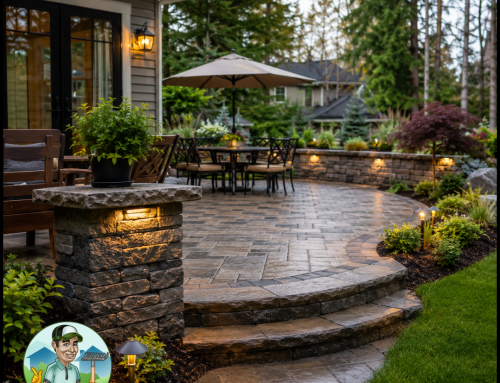

A paver patio can be a useful outdoor space long after summer ends. But when leaves collect, rain lingers, and the surface stays shaded, a patio may need a little attention before winter weather settles in.
The goal isn’t to make every paver look brand new. It’s to keep walkways clear, notice changes early, and avoid cleaning methods that damage the joints or surface. Here’s a practical way to look after a patio in Vancouver and nearby Clark County.
Our team installs paver patios and walkways for properties throughout the area. If you’re seeing repeated puddles or uneven sections, a closer look can help you decide what needs attention.
Key Takeaways
- Sweep leaves and debris away before they trap moisture on the surface.
- Look for slippery growth, missing joint material, loose pavers, and areas where water collects.
- Use cleaning products and tools recommended for your particular pavers and joint material.
- Direct pressure washing can dislodge joint sand and may damage some surfaces.
- Record recurring drainage or settlement problems instead of guessing at a repair.
Clear Leaves and Debris
Start with a broom. Sweep fallen leaves, twigs, and soil off the patio and the walkways leading to it. Pay particular attention to shaded corners and the spaces around furniture, planters, and steps.
Wet leaves can make a smooth surface slippery and leave stains if they sit. Moving planters occasionally also gives you a chance to check what’s happening beneath them. Don’t drag heavy furniture across the surface if it could scratch the pavers.
Keep nearby drains and surface inlets free of loose debris where you can reach them safely. If an inlet stays clogged or water backs up, have the cause checked rather than forcing material farther into the drain.
Check for Slippery Moss and Algae
Look for green growth where the patio stays damp or shaded, especially along the route to a door or gate. Treat slippery areas as a footing concern. Keep people away from a slick section until it’s safe to use.
A stiff brush and a cleaning method approved by the paver manufacturer may be appropriate, depending on the material. Test any product in an inconspicuous spot first, follow the label, and keep runoff away from storm drains and sensitive plantings. Avoid mixing cleaning chemicals.
Did you know? Oregon State University Extension notes that pavers in damp or shaded areas are prone to moss buildup and recommends regular sweeping and cleaning.
Inspect Joints and Paver Edges
Walk the patio slowly and look for joints that have lost material, pavers that rock underfoot, raised corners, or edge restraints that have shifted. A loose paver near a doorway or step deserves attention because it can become a trip hazard.
Joint materials aren’t all the same. Some patios use polymeric sand; others use different aggregates, particularly when they’re designed to let water pass through the surface. Don’t assume ordinary sand or a sealant is right for your patio. Follow the paver and joint-material manufacturer’s instructions, including any temperature and dry-weather requirements.
If a paver has moved, adding more material to the top won’t necessarily correct the underlying problem. Movement can involve the base, edges, roots, or drainage, so identify the cause before choosing a repair.
Watch Where Rainwater Goes
After a typical rain, take a look from a safe, dry spot. Notice where water comes from, where it collects, and whether the same puddle returns. Photograph the area and note how long the water remains after the rain stops. A brief puddle during heavy rain and standing water that persists can point to different situations.
Check whether leaves are blocking a visible inlet or whether a downspout is directing water toward the patio. Don’t move water toward a neighbor’s property or alter a drainage system without understanding where the water will go. An appropriate solution depends on the site and local requirements.
Our guide to drainage solutions for sloped yards explains how the wider landscape can affect the path rainwater takes.
Choose Cleaning Methods Carefully
Start gently and follow the guidance for your specific paver surface. Aggressive pressure washing can remove joint sand, etch some materials, or drive water where it doesn’t belong. Oregon State University Extension generally discourages power washing pavers because it can dislodge joint sand.
If you use a cleaner, confirm that it’s suitable for the pavers and surrounding plants. A product marketed for one surface isn’t automatically safe for every patio. Rinse and dispose of residue according to its instructions and local rules.
Be cautious with sealers, too. Not every paver or joint material should be sealed, and wet conditions may prevent a product from performing as intended. Ask the manufacturer or an experienced installer about the product, preparation, and weather window before proceeding.
What About Ice and Snow?
When freezing weather arrives, clear a safe walking route without scraping or chipping the paver surface. A plastic shovel may be gentler than a metal blade, but follow the paver manufacturer’s care instructions.
Deicing products can affect different pavers, joint materials, plants, and nearby surfaces differently. Check the manufacturer’s instructions for the exact paver and any product before applying it. Avoid using a sharp tool to break ice against the surface.
If an area is icy or unstable, don’t risk a fall to inspect it. Wait until conditions improve or arrange professional help.
When to Ask for Help
Consider an assessment if pavers rock, a raised edge catches your shoe, a section keeps settling, or water repeatedly pools near the house. Photos taken before and after rain can make it easier to explain the problem.
An installer can look at the pavers, edge restraints, base, and surrounding grades together. The right answer may be a localized repair, a drainage adjustment, or a larger project. The site needs to be inspected before anyone can say which is appropriate.
If you’re planning a new patio rather than maintaining an existing one, our article on what affects paver patio cost walks through the choices that influence an estimate.
Frequently Asked Questions
Should I pressure wash my pavers before winter?
Not automatically. High-pressure cleaning can dislodge joint sand or damage some pavers. Begin with sweeping and use the cleaning approach recommended for your materials.
Can I add joint sand when the patio is wet?
Check the joint-material manufacturer’s instructions. Many products have specific dry-surface and weather requirements. Permeable systems may need a different joint aggregate altogether.
Is a puddle on my patio always a serious problem?
Not necessarily. Note where it forms, how often it returns, and how long it remains. Persistent water, a changing surface, or water collecting near the home is worth assessing.
Do pavers need to be sealed every winter?
No. Sealing depends on the paver and joint material, the product, and the manufacturer’s recommendations. Don’t apply a sealer simply because the season changed.
Can Lawn Care by Dan look at a patio problem?
Contact our team to discuss the property and what you’ve noticed. We can explain whether the work fits our services and arrange an estimate when appropriate.
Get Your Patio Ready for Wet Weather
A few simple checks can make your patio easier to use and help you spot changes before they become harder to address. Clear the leaves, watch the joints and edges, and pay attention to where rainwater goes.
Call Lawn Care by Dan at 360-593-0997 or request an estimate online to discuss paver patios and landscaping in Vancouver and surrounding Clark County.